
Sterile Soil Displays Metabolic Activity for Six Years, Challenging Life’s Monopoly on Biochemistry
What I find absolutely fascinating about this research is how it fundamentally challenges our understanding of where life ends and chemistry begins. A French biochemist’s accidental discovery has revealed that supposedly dead soil continues exhibiting metabolic-like processes for years after sterilization, suggesting that some biological reactions might not be exclusively biological after all.
Sébastien Fontaine’s team at the French National Institute for Agriculture, Food, and Environment stumbled upon this phenomenon while trying to measure carbon emissions from completely lifeless soil. After bombarding soil samples with sterilizing gamma radiation, they expected all biological activity to cease. Instead, the soil kept “breathing” – releasing carbon dioxide for an astounding six years.
When Dead Soil Won’t Stay Dead
The implications here are staggering, and I believe this research deserves far more attention than it’s receiving. The team’s methodology was rigorous: they sealed irradiated soil in jars, confirmed the absence of living cells through microscopy, and verified no DNA or RNA remained. Yet the soil continued consuming oxygen and producing carbon dioxide at measurable rates.
What’s particularly compelling is their fuel cell experiment, which detected electrical currents flowing through the sterile soil – evidence of electron transfer processes typically associated with cellular respiration. This isn’t just residual chemical decay; it’s organized biochemical activity happening without any living organisms present.

The Krebs Cycle Without Cells
The researchers identified four intermediate molecules from the Krebs cycle – the fundamental energy-producing pathway in all living cells – occurring spontaneously in their sterile samples. This discovery should revolutionize how we think about metabolism and its origins.
I think this finding is most relevant for origin-of-life researchers and astrobiologists who are trying to understand how complex biochemistry could emerge from non-living matter. For evolutionary biologists, this suggests that metabolic processes might have preceded genetic systems, supporting the “metabolism-first” theory of life’s origins.
Who Benefits and Who Doesn’t
This research is crucial for scientists studying extremophiles and searching for life on other planets. If metabolic-like processes can occur in sterile environments, it changes how we interpret biosignatures and design life-detection experiments. Space agencies and astrobiologists need to pay attention to these findings.
However, I don’t think this research immediately benefits agricultural scientists or soil ecologists in practical ways. The processes observed occur over years and don’t significantly impact soil fertility or carbon cycling in real-world conditions.

The Metal Catalyst Theory
The most plausible explanation involves metal oxides naturally present in soil – iron and aluminum compounds that can catalyze biochemical reactions without enzymes. This aligns perfectly with theories suggesting that metal-based catalysis preceded protein-based enzymes in early Earth’s chemistry.
Some critics argue that residual enzymes from dead cells might explain the observations, but I find this unconvincing. Enzymes typically degrade rapidly outside cellular environments, and no known enzyme remains functional for six years under these conditions.
What This Really Means
In my opinion, this research represents a paradigm shift in biochemistry. It suggests that the chemical reactions we associate with life might be more fundamental properties of matter under certain conditions. This doesn’t diminish life’s uniqueness – living systems still organize and control these processes with remarkable precision – but it does blur the boundaries between living and non-living chemistry.
The broader implications extend beyond academic curiosity. Understanding how metabolic processes can occur without cellular machinery could inform biotechnology applications, help us recognize life in unexpected environments, and provide insights into how complex chemistry emerges from simple components.
What matters most here isn’t just the specific finding about soil respiration, but the fundamental question it raises: How much of what we consider uniquely biological is actually just sophisticated chemistry that life has learned to harness and control?
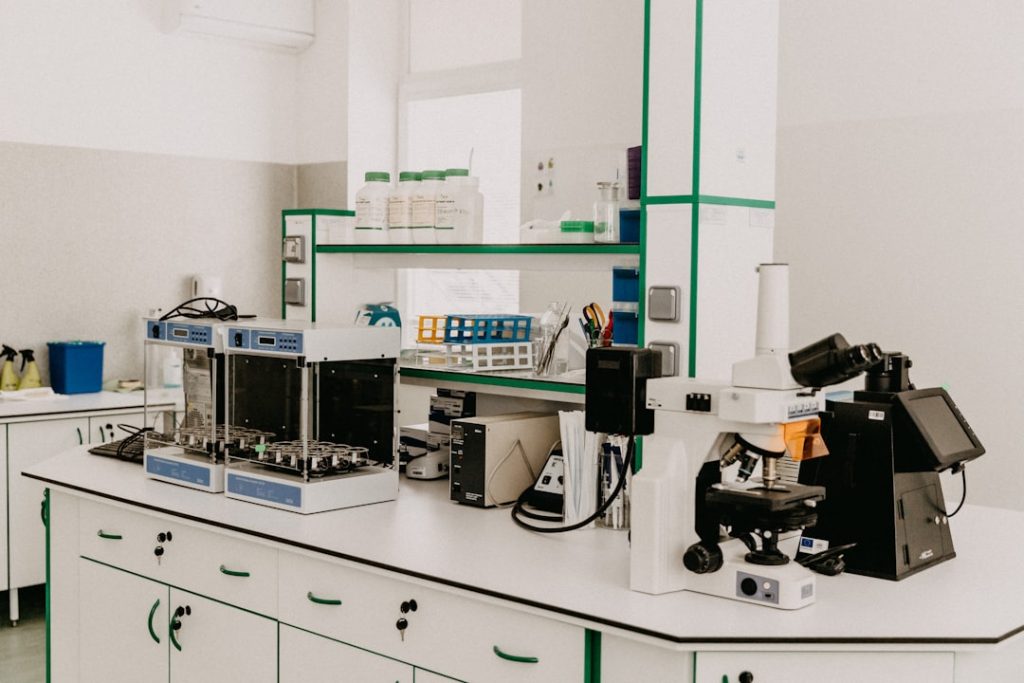
Photo by Trnava University on Unsplash
Photo by Logan Gutierrez on Unsplash
Photo by Yassine Khalfalli on Unsplash