
When Celebrity Family Brands Overshadow Authentic Relationships
The modern celebrity family business model has reached a fascinating yet troubling inflection point, and I believe we’re witnessing something that should concern anyone who values authentic family relationships over manufactured public personas.
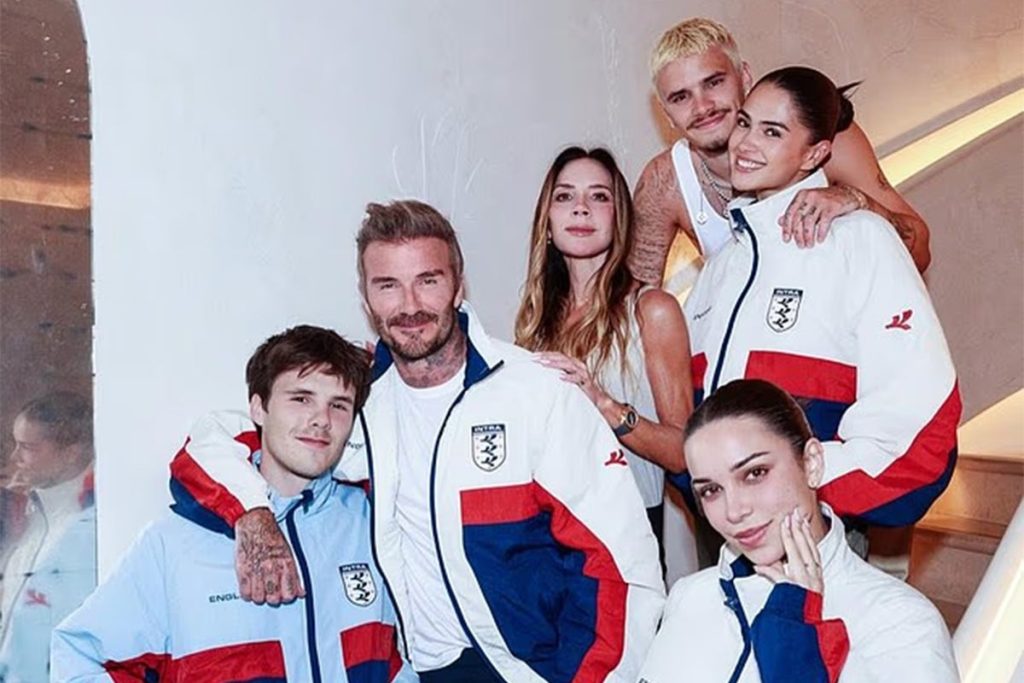
Take the recent launch of Romeo’s fashion venture, Intra, which specializes in retro-inspired athletic wear. The 23-year-old’s debut was accompanied by carefully orchestrated family photos featuring coordinated outfits and strategic positioning – the kind of polished presentation that makes my skin crawl with its obvious calculation.
What strikes me most about this situation is how transparently transactional it all feels. Here’s a family where the 14-year-old daughter is reportedly preparing to launch a beauty brand inspired by Korean cosmetics, while the youngest son pursues music with his band. Meanwhile, their parents have reportedly doubled their wealth to over a billion pounds in just twelve months.
This matters because it represents a broader shift in how celebrity families operate, and frankly, I find it deeply troubling. We’re looking at a generation of young people who’ve never known life outside the machinery of brand building and social media performance.
The timing of Romeo’s sportswear launch, coinciding with major sporting events, reveals the calculated nature of these ventures. This isn’t organic entrepreneurship – it’s strategic brand extension using the family name as currency. And honestly, that’s exactly what makes it so problematic.
What makes this story particularly compelling is the earlier public criticism from the eldest son, who accused his parents of prioritizing brand promotion over genuine family relationships. His statements about how “family love is decided by social media posts” and the pressure to “drop everything for photo opportunities” paint a disturbing picture of life inside a celebrity brand machine.
I think this situation is relevant for anyone trying to understand how modern celebrity culture affects family dynamics. It’s particularly important for parents who might be tempted to monetize their children’s talents or push them into public-facing careers before they’re emotionally ready.
The response to that criticism – which appears to be doubling down on the very behavior that was criticized – tells us everything we need to know about the family’s priorities. Rather than stepping back to examine whether their approach might be damaging relationships, they’ve accelerated their brand-building activities.
What concerns me most is how this affects the younger children. A 14-year-old launching a beauty brand while studying for crucial exams? That’s not nurturing talent – that’s exploiting it for commercial gain. The fact that this is happening during such a critical academic period shows a fundamental misunderstanding of what should matter at that age.
The music career of the youngest son adds another layer to this story. His lyrics, particularly songs like “Loneliest Boy,” suggest these young people are processing complex family dynamics through their art. When a teenager writes about family rifts and heartbreak, we should be listening, not using it as another marketing opportunity.
This phenomenon isn’t just about one family – it’s about how celebrity culture has evolved to consume entire family units. The traditional model where one parent achieved fame and the family benefited privately has been replaced by a system where every family member becomes a brand extension.
I believe this approach is ultimately unsustainable and potentially damaging. While the financial rewards are obvious – and clearly substantial – the emotional and psychological costs are becoming increasingly apparent. When family relationships become subordinate to brand management, something essential is lost.
The coordinated fashion shoots and strategic social media posts might generate impressive engagement numbers, but they also create a public performance of family unity that may not reflect private reality. That disconnect between public image and private experience can be particularly harmful for young people still developing their sense of identity.
What bothers me most is how this normalizes the commodification of childhood and adolescence. These young people have never had the option to fail privately, learn from mistakes without public scrutiny, or develop their own interests without considering their commercial potential.
The broader implications extend beyond celebrity culture. As social media makes everyone a potential brand, many families are adopting similar strategies on a smaller scale. The pressure to present a perfect family image online, to monetize children’s activities, and to treat family relationships as content opportunities is becoming increasingly common.
For those watching this unfold, I think it’s important to recognize what we’re really seeing: a family that has become so successful at building a brand that they may have forgotten how to simply be a family. The tragedy isn’t their wealth or success – it’s that their approach may be preventing them from experiencing the genuine connections that make life meaningful.
The real test will be whether future generations can break free from this cycle or whether they’ll continue to prioritize brand building over authentic relationships. Based on current evidence, I’m not optimistic about their ability to change course voluntarily.